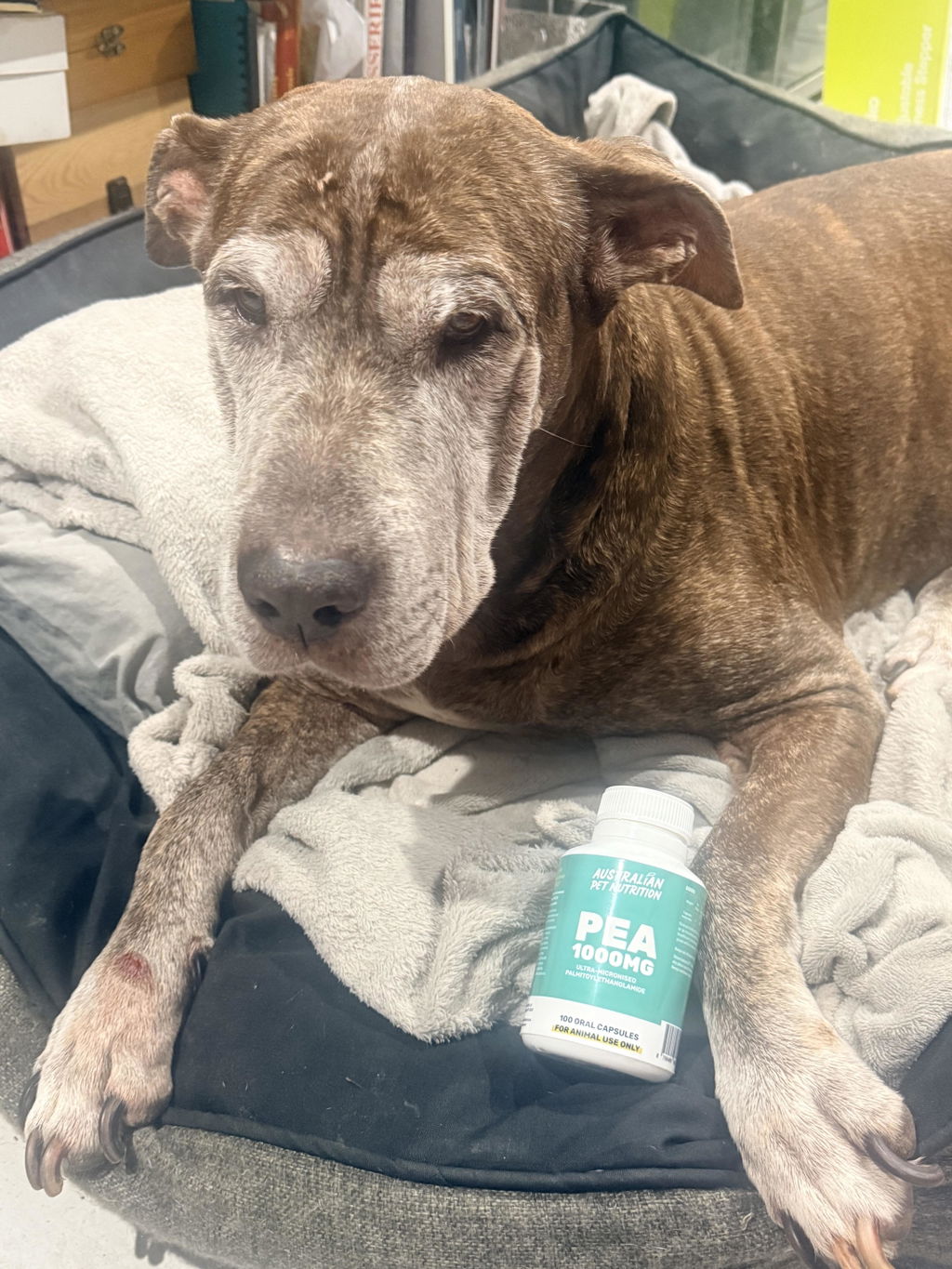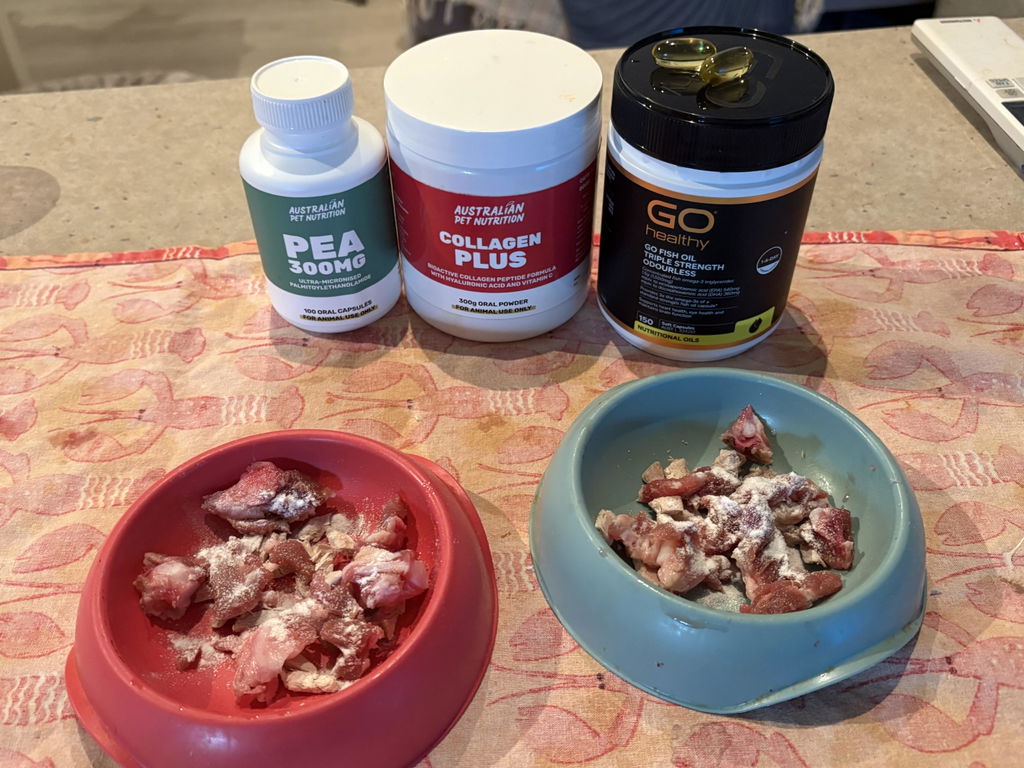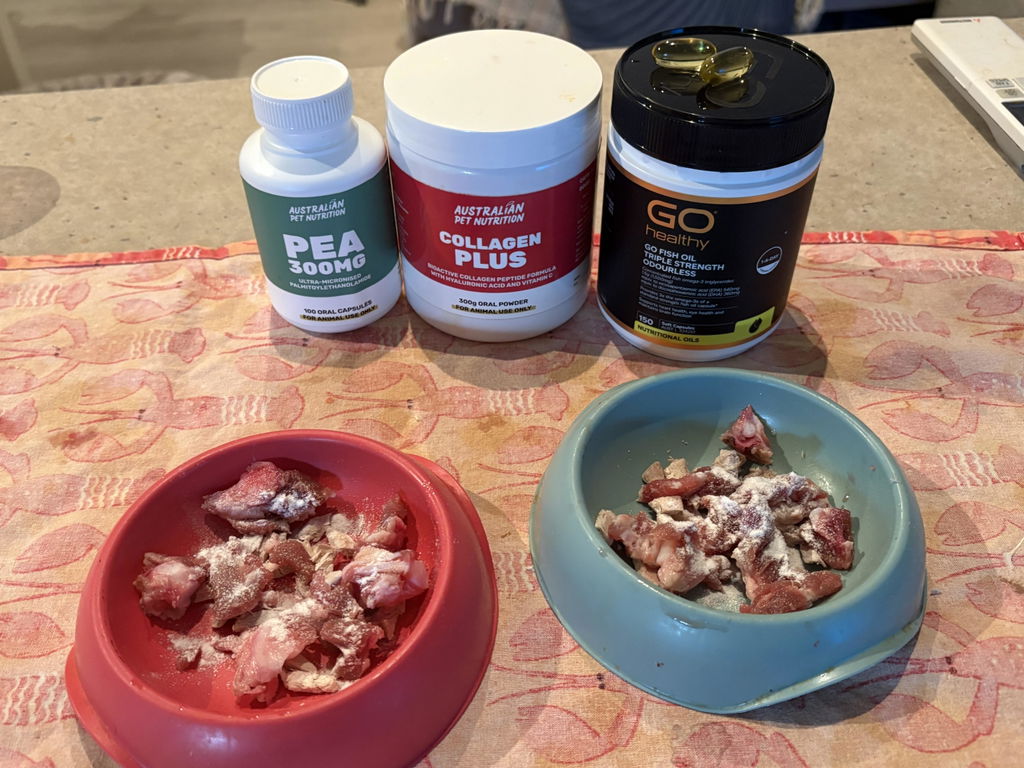

Palmitoylethanolamide (P.E.A) Capsules for dogs and cats. P.E.A is a naturally occurring fatty acid amide that supports the body's endocannabinoid system, helping regulate inflammation, calm pain signals, and stabilise mast cells involved in allergic reactions.
Supplementing with ultra-micronised P.E.A provides gentle, non-sedating support for pets experiencing discomfort, inflammation, or allergic skin conditions.
How P.E.A supports your pet: P.E.A works by helping regulate the body's inflammatory response and modulating pain signalling pathways. It indirectly activates cannabinoid receptors (CB1 and CB2), as well as PPAR-alpha and other receptors involved in inflammation control.
Research has shown P.E.A may support pets experiencing:
Why choose P.E.A? Studied since 1957, P.E.A is recognised as a natural anti-inflammatory and analgesic compound. Clinical research involving more than 5,000 patients and 500+ scientific publications has documented its safety and efficacy.
Benefits include:
Ingredients: Ultra-micronised Palmitoylethanolamide (P.E.A) in a cellulose capsule.
Directions: Give twice daily (morning and evening), approximately 12 hours apart, or as recommended by your animal healthcare professional. Can be given with or without food.
Please refer to the bottle for exact dosing instructions.
Storage: store below 25 degrees Celsius, in a cool, dry place out of direct sunlight. Keep container tightly closed.






Our aim is simple, to extend and improve quality of life of dogs & cats. We aim to do this by sourcing natural healthy alternatives to many of the toxic and chemically laden products on the market for our beloved pets and by sharing our knowledge and experience of nutrition, natural remedies and cleansing your pet of toxins.
We are passionate about natural nutrition and see it as the fundamental essential for good health. A varied fresh whole food diet with minimal processed foods and minimising chemical and toxin exposure is essential to your pets health and wellbeing.
We are also passionate about reducing stress, physical & psychological pain in our dogs lives through equipment, training and activity choices.
WE ARE COMMITTED TO WORKING
Our AP branded treat bags are 100% recyclable plastic

Express and Parcel post available. We also deliver to Seaswift and Auriga Barges or Fly Tiwi etc. for transport to remote communities.

38 Bishop St, Woolner NT
Get Directions
Mon - Fri: 9am-5.30pm
Sat: 9am-4pm
Sun & Public Holidays - CLOSED
We deliver free of charge to Darwin, Northern Suburbs, Palmerston and Rural Area for orders $60+ on Tuesday and Friday afternoons.

On our blog we share helpful tips and information on your pet from nutrition to how to keep them calm.